Monday, August 30, 2010

Green Guide

This post is about the Green Guide from National Geographic. They have a monthly newsletter that I signed up for. The site has several sections, including Home & Garden, Parenting, Travel & Transportation, Food and their blog.
I did their water footprint calculator, which was interesting. Here are my scores:
Home - 48
Diet - 763
Energy - 74
Stuff - 22
Overall - 907
The scores for an average American are:
Home - 100
Diet - 1056
Energy - 700
Stuff - 125
Overall - 1981

Based on this I feel pretty good about myself but the results told me I could even lower my score another 20%. I was amazed at the water it takes to produce various types of food in people's diet.

Another feature was about what country is the greenest.

Wednesday, August 25, 2010

Walk Score

I read an article in my World Changing email that I received earlier this week about Walk Score and calculating how pedestrian/transit friendly different areas of cities are. Below is a transit heat map picture of Boston on the left, San Francisco in the middle and Seattle on the right. The brighter the green, the more walking and transit friendly the area is and the darker orange/red it is means it is less friendly and requires more individual vehicle transportation.

You can calculate your own score for addresses you input on the Walk Score website. My old address had a score of 88, which was good. My new score is a 91 and called a "walker's paradise" so I am pretty stoked about that. I thought it was interesting that 22% of Seattle residents had a higher score still, I guess that means Seattle is pretty good for walking and transit.

Here is a link to another World Changing article from the past about this walk scoring.

Seattle was the #6 most walkable city on their ranking. San Francisco was #1

Save the Serengeti

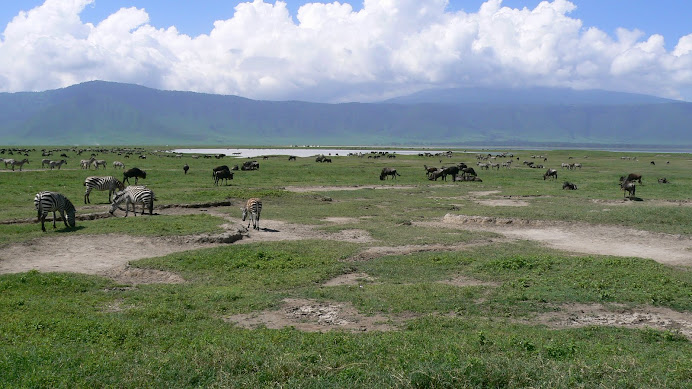
I read an article this morning about the Tanzanian government moving forward with a highway through the Serengeti plain just south of the Tanzania-Kenya border. I then followed through to a link about a group opposing this and their site titled Save the Serengeti. On their site they have the map below showing the proposed route as well as an alternate route that has been proposed to the south of the national park and conservation areas.
To give some perspective on the vast size of this park, just the park alone is about 5700 square miles, about the size of Connecticut and Rhode Island combined or compared to Yellowstone National park, which is about 3400 square miles. The conservation areas surrounding the Serengeti, including Masai Mara NP in Kenya more than double the size of this contiguous area of conservation.

Below, there is a picture of mine from when I visited the Serengeti and was taken from atop a rock outcrop. It would be strange to see a black line running through the unbroken flat piece of green land.

The conservation groups opposing this are accurate about the danger of animal crossings for the animals but they don't even mention the danger to people on the highway. I saw the remnants of an Elephant v. Semi-truck collision on a highway in Botswana and neither end of that collision came out a winner.
Seattle Solar

Solar power in the dreary, cloudy northwest? Seattle City Light, the electric company that is part of the City of Seattle, says it is just fine here. They state that we actually get more sun than Germany, which is currently the largest solar power market in the world.

Seattle City Light is also looking to offer an option for community solar power.

There is a FAQ page about solar energy on their site as well.

Friday, August 20, 2010

Solar Power

I have been absent from posting for a week but I haven't been absent from learning about Solar Power as I said last week was going to be a new area for me. This is a brief post about a solor power plant in Nevada. The Nellis Solar Power Plant is located on Nellis Air Force Base just north of Las Vegas. The plant supplies about a quarter of the power for the base. Solar power is literally the perfect fit for an area of high energy consumption (think air-conditioned casinos, neon lights, massive hotels) and an abundance of sunny days in the desert!
This array has 70000 panels and they rotate to follow the sun and maximize power throughout the day. Here is the brief White House press release when President Obama visited the plant in 2009, there are a few more statistics there.

Friday, August 13, 2010

Learning About Solar

So, I mentioned earlier I am going to learn about solar power and I am starting today. I began with an article I found on Yahoo Green. This gave me a little bit of information about the affordability of solar panels for a home. I followed the link at the bottom of the article to ecomii to see their buying guide for making a home green.

I also read a great little article about the costs for installing solar panels and how to calculate different aspects of how much solar installation is right for people based on their current electric bills.

Solar Power

I think I will learn more about solar power and one of the items that sparked this additional interest was a featured article from World Changing, which was in the email newsletter that I received this week. The article was titled: Scaling Up Solar: The Global Implications of a New Study that Says Solar Power Is Cost Competitive with Nuclear Power. It was interesting that now in North Carolina solar power can be cheaper than nuclear power. There is a wrinkle in this and that is that tax credits, etc. are part of what makes this happen and part of why this price equity does not happen in every jurisdiction since each place in the US (and the world) has its own set of policies, taxes, etc. that impact this.

This article was a good starting point for my interest in this so look for more upcoming posts about solar power.